Why We Stopped Letting a Middleman Decide How Your Pizza Gets to You
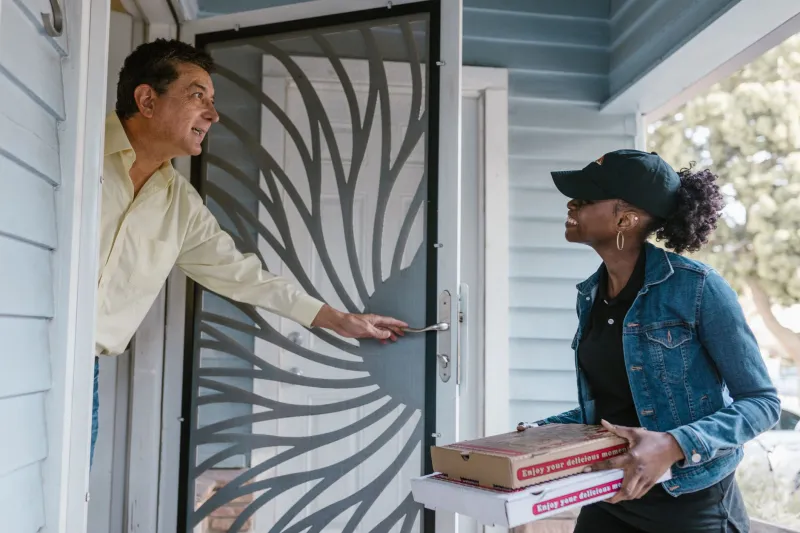
Somewhere between the moment you tap "place order" on a third-party app and the moment a driver shows up at your door, something happens to your pizza. Not just physically — though the insulated bag situation is its own conversation — but economically. A significant slice of what you paid quietly exits the building, heading somewhere that has nothing to do with the dough, the sauce, or the people who made your dinner.
Independent pizzerias across the country are starting to say: enough.
The shift away from DoorDash, Grubhub, Uber Eats, and their competitors isn't a fringe movement anymore. It's a genuine industry reckoning, and if you've noticed that your favorite local spot now pushes you toward their own website or phone number, there's a real reason for that — one that affects your wallet just as much as theirs.
The Commission Math Nobody Talks About
Here's the part that tends to surprise people: third-party delivery platforms typically charge restaurants somewhere between 15% and 30% of every order in commission fees. On a $30 pizza order, that's up to nine dollars leaving the building before the pizzeria covers a single ingredient, a single hour of labor, or a single utility bill.
For a large chain with enormous volume and corporate infrastructure, that's painful but survivable. For an independent shop — the kind of place where someone's grandmother's sauce recipe is actually on the menu — it can be the difference between staying open and shutting down. Thin margins are baked into the restaurant business by default. Shaving another quarter off every dollar earned doesn't just hurt; it fundamentally changes what a small pizzeria can afford to do.
Some shops respond by raising menu prices on third-party platforms, which is why you might have noticed that the same pizza costs more on an app than it does if you call directly. Others absorb the hit and quietly watch their ability to invest in better ingredients or pay their staff fairly get chipped away over time. Neither outcome is great for anyone who actually cares about the pizza.
You're Also the Product
The commission fee is only part of the story. There's something else these platforms extract that's harder to put a dollar figure on: your data.
When you order through a third-party app, the restaurant doesn't learn much about you. They don't know your name, your preferences, your order history, or how often you come back. The platform knows all of that — and they use it to market to you, to recommend competitors, and to build a customer profile that belongs entirely to them, not to the pizzeria that actually cooked your food.
For a neighborhood spot trying to build real relationships with regulars, that's a meaningful loss. The ability to say "hey, you ordered that white pizza with roasted garlic three times last month — want to try our new seasonal special?" disappears entirely when a middleman owns the conversation.
Direct ordering flips that dynamic. When you order through a pizzeria's own website or app, you become their customer in the fullest sense. They can reach you with deals, remember your preferences, and treat you like a regular rather than a transaction.
What Direct Ordering Actually Looks Like in Practice
Building a direct-to-consumer ordering system used to require serious technical resources that most small restaurants didn't have. That's changed pretty dramatically in the last few years. Platforms purpose-built for restaurant direct ordering have made it genuinely accessible for independent shops to run their own online ordering without handing a third of their revenue to a delivery aggregator.
The experience from a customer's perspective doesn't have to feel like a downgrade. A well-built direct ordering site is just as fast, just as easy, and often cheaper — because the restaurant isn't inflating prices to cover commission fees. Some shops pass those savings directly to customers through lower prices or free delivery thresholds. Others use the margin to invest in packaging, faster delivery, or simply keeping their prices stable instead of quietly hiking them year over year.
At Piezano's, ordering through piezanospizzeriamenu.com means your order goes straight to our kitchen without a detour through a corporate server farm in San Francisco. That's not a political statement — it's just a better pipeline for getting you a hot pizza.
The Surprisingly Italian Logic Behind Going Direct
Here's an angle that doesn't get discussed enough: the move toward direct ordering is, in a weird way, deeply consistent with how pizza has always worked in Italy.
The neighborhood pizzeria model — where a place knows its customers, sources locally, operates with pride, and doesn't need a brand intermediary to explain what it is — is exactly what's being threatened by platform dependency. When a pizzeria outsources its customer relationship to an app, it stops being a neighborhood institution and starts being a ghost kitchen with a logo. The personality, the connection, the sense that someone specific made your food and cares whether you liked it — that stuff erodes.
Going direct is a way of insisting on that relationship. It's a pizzeria saying: we want to know you, we want you to know us, and we'd rather not have a corporation standing between us collecting a toll every time you get hungry.
What This Means the Next Time You Order
None of this is meant to make ordering pizza complicated. It's actually meant to make it simpler. When you order directly from a pizzeria you like, a few things happen:
- More of your money reaches the people who made your food
- You're more likely to get accurate pricing without platform markups
- The restaurant learns who you are and can actually take care of you as a customer
- You're not subsidizing a platform that may be actively recommending competitors in the same app window
The next time you default to opening whatever delivery app is already on your phone, it's worth pausing for ten seconds to check whether the place you're ordering from has their own site. Chances are good that they do, and chances are equally good that the experience — and the price — will be at least as good, probably better.
Pizza is a simple thing at its core. Flour, water, heat, and someone who gives a damn. The fewer layers between you and that, the better the whole thing tends to work.