What Your Leftover Slice Is Actually Trying to Tell You
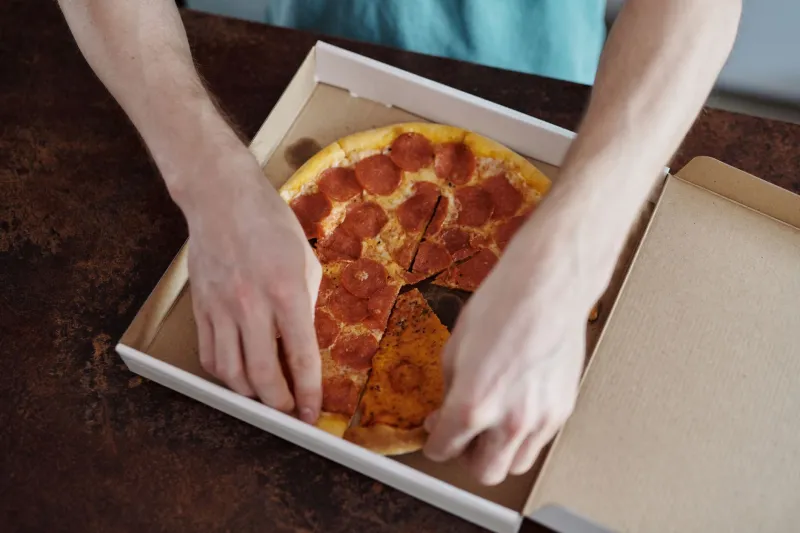
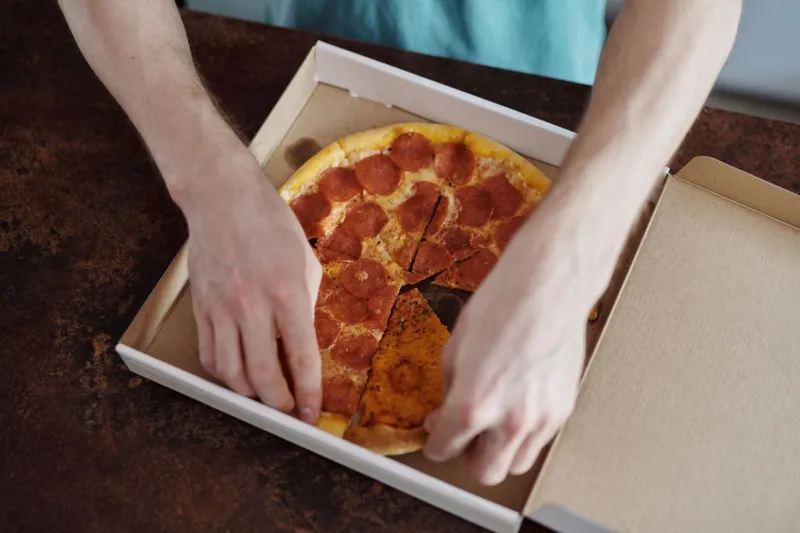
You open the box. The pizza's been sitting on the counter since last night — or maybe it made it to the fridge, maybe it didn't. Either way, what you're looking at right now isn't just cold pizza. It's a kind of fossil record. Every change in texture, every bead of separated oil, every crust that's gone either rubbery or satisfyingly crisp tells a story about what went into that pie before it ever reached your door.
Most people don't think about pizza this way. But once you start, it's hard to stop.
The Crust Doesn't Lie
Let's start with the most obvious indicator: the crust. A slice that's been sitting for eight or ten hours will behave very differently depending on the dough it came from.
Dough that was rushed — proofed quickly with a heavy hand of commercial yeast and not much else — tends to go gummy or weirdly dense once it cools. The gluten structure was never fully developed, so the crumb collapses on itself. You end up with something that feels almost gluey when you bite in, with none of the chew that made it appealing when it was hot.
Dough that was given real time — cold-fermented over 24, 48, even 72 hours — holds up in a completely different way. The extended fermentation breaks down complex starches and develops a more open, structured crumb. When that crust cools, it doesn't collapse. It firms up, sure, but it retains a kind of integrity. Tear a piece off and you'll notice the texture is still layered, still slightly chewy in the right places. That's not luck. That's what slow fermentation actually does to flour and water.
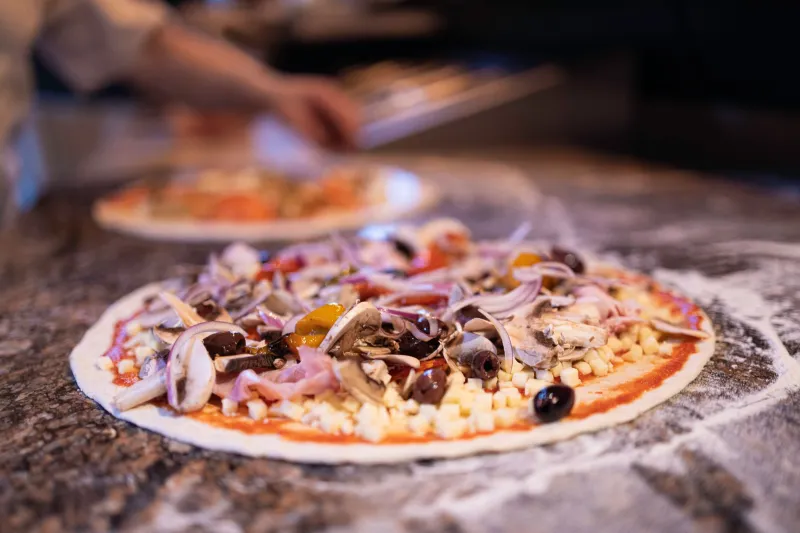
At Piezano's, the dough rests long enough that this difference is real and noticeable — not just when the pizza's fresh out of the oven, but the next morning when you're standing in your kitchen deciding whether breakfast is going to involve a slice.
The Cheese Map
Here's something most people notice but don't think to interpret: the way cheese looks after it's cooled and sat overnight.
Low-moisture, high-quality mozzarella will resolidify in a way that still looks appealing. It might firm up, but the fat doesn't pool aggressively, and the surface stays relatively cohesive. Stretch a piece of that cold cheese and it'll still pull a little — not as dramatically as when it was molten, but it hasn't turned into a rubbery slab either.
Cheaper cheese — the kind that's been heavily processed or blended with fillers — behaves differently. The fat separates more dramatically as it cools, leaving greasy orange pools across the surface. The cheese itself often becomes tough or waxy. It's not just an aesthetic issue. That separation pattern is a direct indicator of the fat content, the moisture level, and ultimately the quality of what was used.
If your leftover slice looks like it's been through some kind of oil spill, that's information. If it looks pretty much like it did when it arrived, just cooler, that's information too.
Topping Migration and What It Means
Pay attention to where your toppings ended up. Sounds trivial, but topping placement after a pizza has cooled can tell you a lot about how it was assembled and how the ingredients were prepped.
Vegetables that were added raw or undercooked will release moisture as the pizza sits. That moisture has to go somewhere, and it usually goes into the crust directly beneath them — softening it, sometimes waterlogging it entirely. A soggy patch under the peppers or mushrooms is almost always a sign that those toppings weren't properly prepared before they hit the pie.
Meat toppings that have shrunk dramatically and turned almost crunchy by morning were probably overcooked to begin with, or placed on the pizza too early in the bake. Properly cooked sausage or pepperoni should still have some give to it the next day — it'll firm up, but it shouldn't turn into jerky.
Then there's the question of topping adhesion. Did everything stay roughly where it was placed, or did your slice turn into a game of topping archaeology where you're reassembling ingredients that slid off during the trip from box to mouth? Toppings that stay put are a sign of intentional layering — cheese placed strategically to anchor things, sauce applied at the right thickness, ingredients distributed with some thought about balance rather than just volume.
Sauce Behavior Overnight
Sauce is one of the more underappreciated indicators in the leftover analysis. A well-made pizza sauce — cooked down to the right consistency, seasoned properly, applied in the right amount — will look almost the same the next day as it did fresh. It might darken slightly, but it holds its place and doesn't soak into the crust in a way that destroys the base.
Overly wet sauce, or sauce applied too generously, creates a soggy middle section that gets worse as the night goes on. By morning, the entire center of the slice has a kind of sodden quality that makes reheating feel like a rescue operation rather than a straightforward warm-up.
The sauce-to-crust ratio is one of those things that's easiest to evaluate on a leftover slice, because the fresh heat isn't masking anything. Whatever was off about the balance becomes very obvious at room temperature.
Reheating as a Final Test
How a pizza reheats is, honestly, the most revealing test of all. A well-constructed pie — good dough, quality cheese, properly prepped toppings — will come back to life in a skillet or a low oven in a way that feels close to the original. The crust crisps up again. The cheese melts back into something appealing. The whole thing regains some of its structural integrity.
A pizza built on shortcuts doesn't get that second chance. The crust stays gummy or dries out completely. The cheese turns greasy. The toppings give up whatever moisture they were holding and make everything wet.
The skillet method — low heat, lid on for the last minute or two to melt the cheese — is the gold standard for leftover pizza. If you try it and the result is genuinely satisfying, you started with something worth eating. If it still feels like a consolation prize, well. Now you know what to look for next time you're ordering.
Why This Matters When You're Ordering
None of this is meant to make eating leftover pizza feel like homework. The point is simpler than that: the choices a pizzeria makes about ingredients, dough, and assembly show up not just in the first hot bite, but in everything that comes after.
A pizza that holds up overnight — one that still has texture, flavor, and structural integrity the next morning — was built with intention. The dough was given time. The cheese was worth using. The toppings were prepared with some care. Those aren't small things.
Next time you've got a box sitting on your counter the morning after a Piezano's order, take a second before you just reheat it and move on. What you're looking at is the full picture of how that pizza was made — and that's a pretty interesting thing to be holding.