How One Bite Rewires Your Brain and Ruins Every Other Pizza Forever
You've probably heard someone say it. Maybe you've said it yourself. "I can't eat pizza from anywhere else anymore." It sounds dramatic — the kind of thing people say in the heat of the moment, still warm from a delivery box. But it turns out there's something real happening in your brain when you encounter a pizza that genuinely hits different. And once you understand the mechanics, the whole thing starts to make a lot more sense.
Your Brain Is Always Taking Notes
Every time you eat something, your brain doesn't just register taste — it builds a memory. Flavor, texture, aroma, even the temperature of the food and the context you ate it in all get filed away together into what neuroscientists call a "flavor memory." These memories are surprisingly durable. They're also the reason a specific smell can transport you back to your grandmother's kitchen in about half a second.
The problem — or the gift, depending on how you look at it — is that flavor memories are comparative by nature. Your brain doesn't store taste in a vacuum. It stores it relative to everything else you've ever eaten. So when something comes along that significantly outperforms your existing benchmark, the old benchmark doesn't just get nudged aside. It gets replaced.
That's the mechanism behind what a lot of Piezano's regulars describe as the "ruined for other pizza" phenomenon. It's not hyperbole. It's neuroscience.
The Role of Ingredient Quality in Sensory Anchoring
Here's where it gets specific. Not all pizza ingredients are created equal, and your palate — whether you've trained it consciously or not — is remarkably good at detecting the difference.
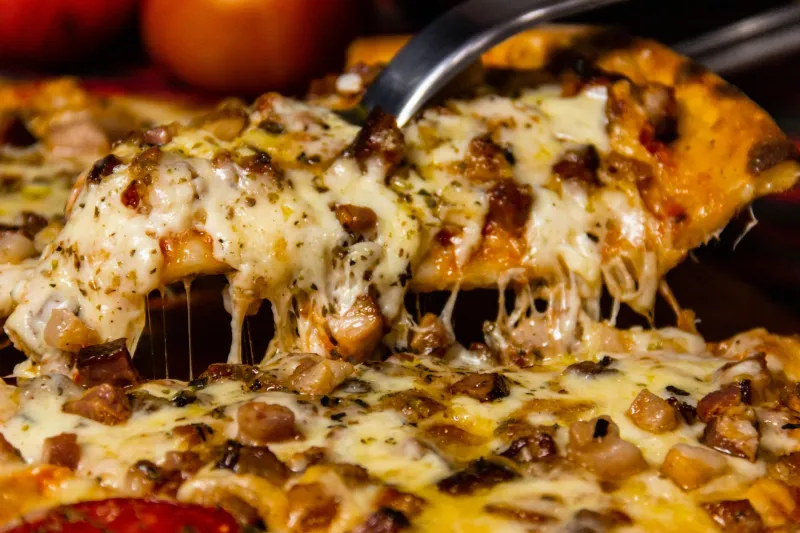
Take cheese. The mozzarella on a mass-produced pizza is typically low-moisture, processed to melt uniformly and hold up under heat lamps. It does the job. But it doesn't have much to say for itself. High-quality mozzarella, on the other hand, has fat content and protein structures that behave differently under heat, releasing aromatic compounds that processed cheese simply doesn't produce. Your nose picks up on those compounds before the slice even reaches your mouth, and that pre-bite anticipation is part of what makes the eating experience feel more complete.
Same goes for sauce. A tomato sauce made from quality crushed tomatoes — with the right acidity, natural sweetness, and minimal added sugar — creates a flavor contrast against the richness of the cheese that registers as balance in your brain. When that balance is off, something feels wrong even if you can't articulate why. You just know the pizza is missing something.
Piezano's leans hard into sourcing ingredients that do their job without shortcuts. And while that might sound like standard-issue food marketing talk, the sensory result is measurable: more aromatic complexity, better fat-to-acid balance, and a finish on the palate that lingers in a satisfying rather than greasy way.
Why Crust Is the Real Differentiator
If you ask most people what separates a great pizza from a forgettable one, they'll usually say the toppings or the sauce. Rarely the crust. But ask a pizzaiolo — or a food scientist — and they'll tell you the crust is where the whole thing either comes together or falls apart.
Dough fermentation is a big part of this. When dough is given adequate time to ferment, yeast and bacteria produce organic acids and alcohols that contribute directly to flavor. A properly fermented crust has a mild tang, a complex wheaty aroma, and a chew that feels substantial without being tough. A rushed dough — one that's been force-proofed with extra yeast or cut short on resting time — tastes flat and bready. It fills you up without doing anything interesting.
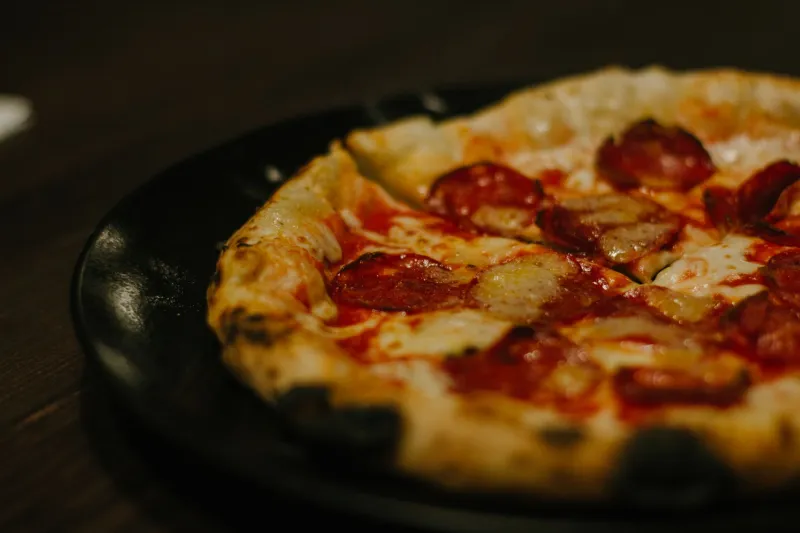
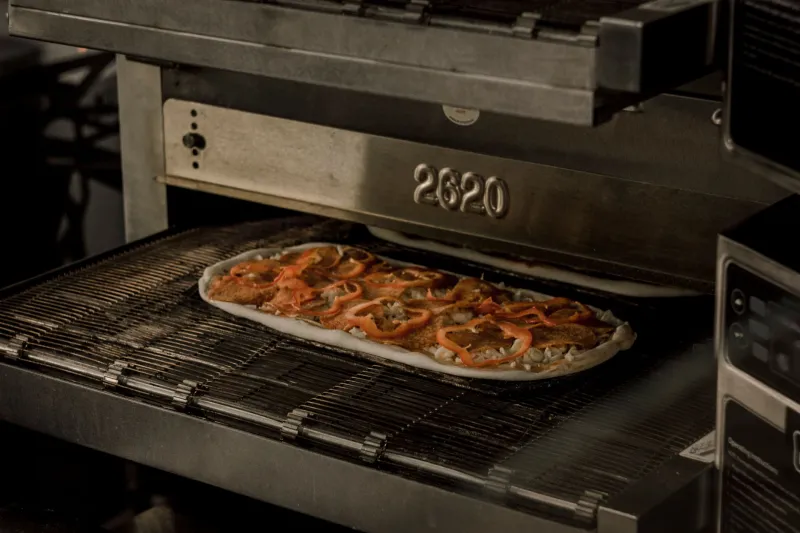
The other factor is the bake itself. High heat — the kind you get from a proper pizza oven — triggers Maillard browning on the crust's surface, creating hundreds of new flavor compounds in the process. That slightly charred, crackly exterior isn't just textural. It's a flavor delivery system. And it's nearly impossible to replicate at lower temperatures, which is why oven-baked home pizza and conveyor-belt chain pizza tend to taste like pale imitations of the real thing.
When your brain encounters a crust that actually tastes like something — nutty, slightly tangy, with that signature char — it recalibrates what "crust" means. After that, a pale, doughy base just registers as incomplete.
Flavor Layering and the Memory Imprint
One of the most underappreciated aspects of a well-made pizza is how the flavors arrive in sequence. This is what chefs call layering, and it's the difference between a pizza that tastes like a single note and one that keeps revealing itself with each bite.
A thoughtfully constructed pizza hits you with aroma first — the herbs in the sauce, the browned cheese, the char on the crust. Then comes the initial bite: crust crunch, the give of the cheese, the brightness of the tomato. Then the finish: the richness of the fat, the lingering savory depth from whatever toppings are in play, maybe a little heat if there's chili in the mix.
When all of those phases are present and well-balanced, the eating experience feels complete in a way that's hard to define but easy to recognize. Your brain files it under "that was really good" and, crucially, updates its expectations accordingly.
The next time you eat a pizza where those phases collapse into a single undifferentiated wall of salt and fat, the absence of that layering registers as disappointment — even if the pizza is technically fine. Your benchmark has moved.
The Piezano's Standard, in Plain Terms
None of this is accidental. The choices that go into a Piezano's pizza — the dough timing, the sauce composition, the cheese selection, the oven temperature — are all aimed at producing that layered, memorable eating experience consistently. Not occasionally. Every order.
That consistency is actually the final piece of the puzzle. Flavor memory gets reinforced through repetition. The more times your brain encounters a pizza that delivers on all of those sensory fronts, the more firmly it establishes that experience as the standard. Other pizzas don't just seem worse by comparison — they seem like they're missing something fundamental.
Which, honestly, they probably are.
So if you've found yourself struggling to enjoy pizza from anywhere else lately, don't worry about it. Your taste buds aren't broken. They've just been recalibrated. And once that happens, there's really only one logical move: order another Piezano's pizza and lean into it.