Late-Night Slice vs. Dinner Pizza: Your Body Is Literally Tasting Them Differently
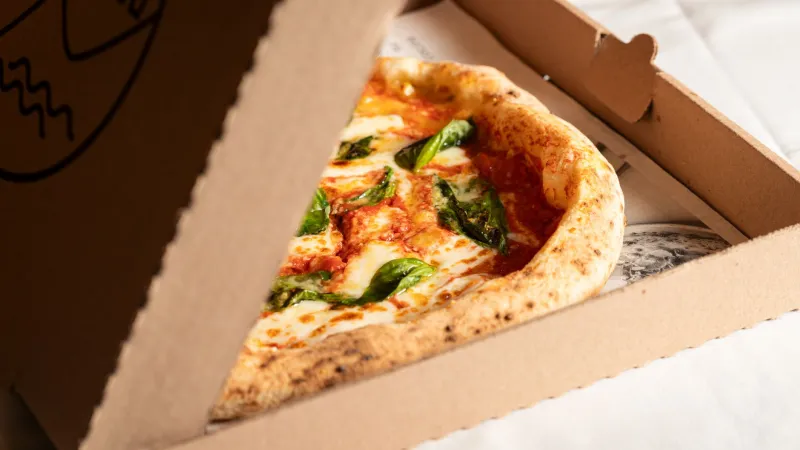
Let's set the scene. It's 7 PM on a Friday. You've got the table set, drinks poured, kids corralled. The Piezano's box opens and everything smells incredible. You eat two slices, maybe three, feel satisfied, and move on with your evening.
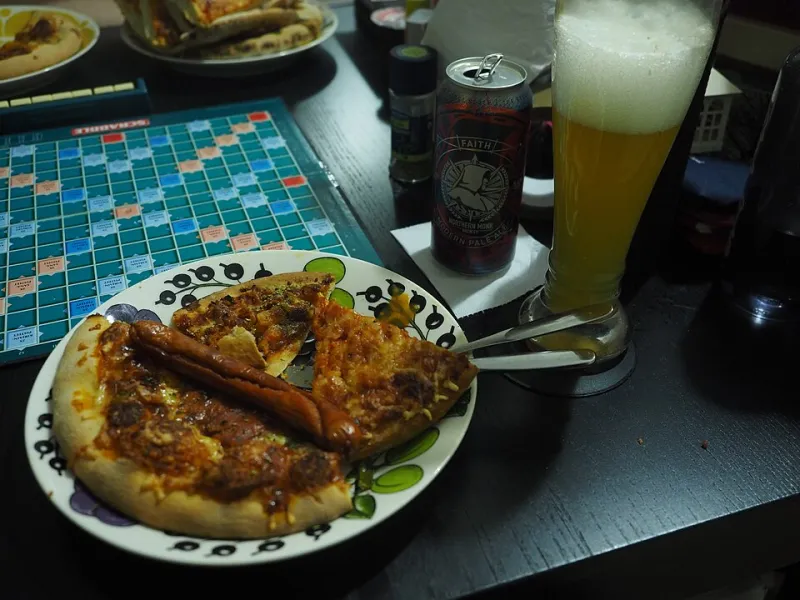
Now rewind. It's 3 AM on a Saturday. Different situation entirely. You've been out. You're tired in a specific, pleasantly worn-out way. The same Piezano's box opens — same pizza, same toppings, same everything — and it tastes like the greatest thing you've ever put in your mouth. You eat four slices without thinking about it. You remember it the next morning with a kind of reverence.
Same pizza. Completely different experience. What's going on?
The answer involves your circadian rhythm, your hunger hormones, your brain's reward circuitry, and the underrated role of context in shaping what food actually tastes like. It's more complicated than you'd think — and more fascinating.
Your Taste Buds Have a Schedule
Here's something most people don't realize: taste perception is not constant throughout the day. Your sensitivity to different flavors — sweet, salty, savory, bitter — fluctuates based on your circadian rhythm, the internal biological clock that governs most of your body's functions.
Research on circadian taste sensitivity suggests that humans tend to be most sensitive to sweet and salty flavors in the late afternoon and early evening — which happens to be peak dinner time for most Americans. This is probably not a coincidence. Your body is tuned to extract maximum satisfaction from food during the hours it expects you to be eating your main meal.
But late at night, after your normal eating window has closed, something interesting happens. Your body's sensitivity to savory, fatty, and umami flavors appears to increase — possibly as part of a survival mechanism that makes calorie-dense food especially appealing when energy stores are running low. Pizza, which is essentially a masterclass in savory, fatty, umami-rich food, hits this window perfectly.
The Hunger Variable Is Doing More Work Than You Think
Hunger isn't just a signal that you need food. It's an active flavor enhancer.
When ghrelin — the hormone your stomach releases when it's empty — is elevated, it doesn't just make you want to eat. It literally increases the sensitivity of your taste receptors and boosts the reward response in your brain's dopamine system. Food consumed when ghrelin is high tastes more intense, more satisfying, and more memorable than the same food eaten in a state of moderate fullness.
At 7 PM, if you've had a reasonable lunch and maybe a snack, your ghrelin levels are moderate. The pizza tastes great, but your reward system is not particularly desperate for input. At 3 AM, after hours of activity without eating, ghrelin is often significantly elevated. Your brain is primed to find incoming calories genuinely thrilling.
This is why the late-night pizza experience feels almost transcendent. Your biology is working overtime to make sure you really, really appreciate it.
Context Is an Ingredient
Beyond the physiological stuff, context shapes taste in ways that are hard to overstate.
A 7 PM dinner pizza is a structured meal. There's probably a table, utensils, plates, conversation. The pizza is one part of a larger evening, and your attention is distributed across all of it. You're tasting the pizza, but you're also tracking the conversation, managing logistics, thinking about what comes next.
A 3 AM pizza is an event. There's nothing competing for your attention. The focus is completely on the food. Every aspect of it — the smell when the box opens, the stretch of the cheese, the crunch of the crust — registers with a clarity that a structured dinner rarely produces.
Food psychologists call this "attentional eating," and the research is pretty clear: when you pay more attention to what you're eating, you perceive it as more flavorful and more satisfying. The late-night pizza gets your full, undivided attention by default. The dinner pizza has to share the stage.
The Social Dimension
Who you're eating with — and the emotional charge of the moment — also rewires how food tastes.
Dinner pizza with family is comfortable and routine. That's not a bad thing — comfort is genuinely pleasurable — but it doesn't produce the kind of heightened sensory experience that novelty and social excitement do.
Late-night pizza, on the other hand, tends to happen in a state of social heightening. You're with people you've been having fun with. Everyone's a little loosened up. There's laughter, there's energy, there's the specific pleasure of sharing something indulgent at an hour when you're technically not supposed to be eating.
Positive social emotion amplifies food satisfaction in measurable ways. The pizza didn't change. The company and context did, and your brain processed the whole package as a better experience.
Does Time of Day Affect Which Pizza to Order?
Given all of this, it's worth thinking about how to order strategically — if you're into that kind of thing.
For a standard dinner situation, bold flavors tend to hold up well because you're not at peak hunger and you need the toppings to do more work. A pizza with a well-seasoned sauce, quality cheese, and enough topping variety to hold your attention across multiple slices is the right call.
For late-night ordering, simpler tends to be better. When your ghrelin is high and your attention is fully on the food, complexity can actually be overwhelming. A clean cheese pizza or a classic pepperoni hits harder in those conditions than a loaded specialty pie. You want the fundamentals to shine — crust, sauce, cheese — and at 3 AM, they will.
Piezano's menu works across both situations, but it's worth knowing that your own state is doing as much work as the pizza is.
The Practical Upshot
If you want to optimize your Piezano's experience — and honestly, why wouldn't you — a few things are worth keeping in mind.
Eat when you're actually hungry, not just when the clock says it's mealtime. A little genuine hunger going into the meal dramatically improves the experience. If you're ordering for a group at dinner, plan for conversation and keep the order simple enough that the pizza doesn't have to compete with itself. And if you find yourself placing a late-night order, lean into it. Your biology is on your side, the conditions are perfect, and the same pizza you've ordered a dozen times is going to taste like the best version of itself.
Same pizza, different universe. That's not a trick of memory. That's just your body doing exactly what it's designed to do — and Piezano's being exactly what it's supposed to be, whenever you need it.