How a Cured Meat Nobody in Italy Recognizes Became America's Most-Ordered Pizza Topping
Walk into any pizzeria in America — from a strip mall slice shop in Ohio to a wood-fired joint in Brooklyn — and you'll find pepperoni sitting at the top of the topping charts. It's the default. The safe bet. The thing half the table agrees on before anyone even opens the menu. But here's something that might genuinely surprise you: pepperoni as we know it has essentially no roots in Italy. It's an American invention, born from immigration, adaptation, and a whole lot of economic improvisation. And the journey from "what even is this?" to "one large pepperoni, please" is one of the more interesting stories in American food history.
Italy Has Salami. America Made Pepperoni.
The word "pepperoni" does come from Italian — specifically from peperone, which just means bell pepper. If you walk into a pizzeria in Rome and ask for a pizza ai peperoni, they'll bring you a pie topped with roasted bell peppers. Not a single curled, orange-edged slice of cured meat in sight.
The spiced, dried sausage Americans know and love was developed by Italian immigrants in the United States sometime in the early 20th century. It drew heavily from southern Italian cured meat traditions — think soppressata, Calabrian salami, and other pork-forward charcuterie that immigrants brought over as both food and cultural memory. But the specific product that emerged was shaped by American ingredients, American butchering practices, and the practical realities of running a food business in a new country.
Early references to pepperoni as a specific product start showing up in New York City around the 1910s, primarily in Italian-American butcher shops and delis concentrated in neighborhoods like Little Italy. It was cheaper to produce than many traditional Italian cured meats, used a blend of pork and beef that reflected what was affordable and available, and had a flavor profile — smoky, fatty, with a paprika-driven heat — that was calibrated to American tastes without fully abandoning the Italian charcuterie tradition.
Pizza and Pepperoni: A Match Made in New York
For the first few decades of its existence, pepperoni was mostly a deli product. It showed up on sandwiches and antipasto platters before it ever landed on a pizza. The pairing with pizza happened gradually, driven by the same Italian-American communities that were simultaneously building the American pizzeria industry from the ground up.
As pizza spread beyond its early footholds in New York, New Haven, and Chicago in the post-World War II era, pizzeria owners needed toppings that could hold up to the heat of a commercial oven, had strong flavor, and were easy to source and store. Pepperoni checked every one of those boxes. It didn't require prep work. It crisped up beautifully at high heat. It added fat and salt and punch to a cheese pie without overwhelming the whole thing. From an operational standpoint, it was almost a perfect topping.
The postwar pizza boom — fueled by returning soldiers who'd developed a taste for it, the rise of suburban pizzerias, and eventually the launch of national chains in the 1960s — locked pepperoni in as the definitive American pizza topping. Once chains like Pizza Hut and Domino's standardized their menus around it, the deal was essentially sealed. Pepperoni wasn't just popular anymore. It was the expectation.
The Economics Behind the Icon
It's worth pausing on why pepperoni won out over other potential contenders. Sausage is delicious on pizza. So is ham. So are mushrooms. But pepperoni had a specific economic and logistical profile that made it ideal for scaling.
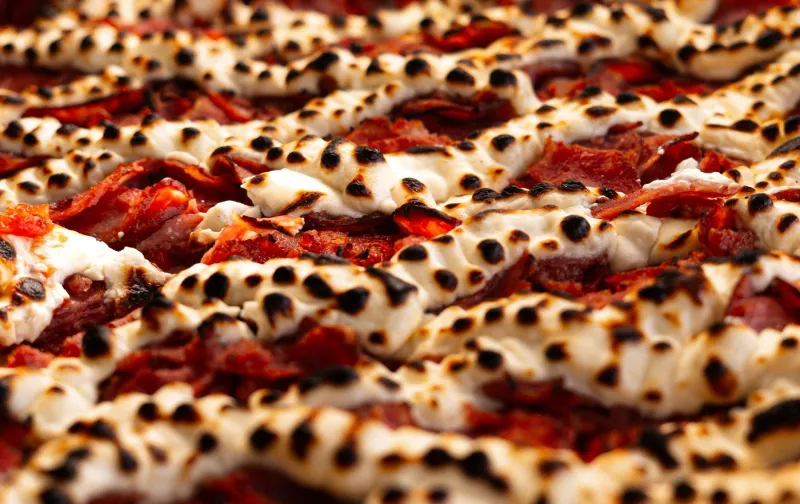
Because it's a cured, dried product, it has a long shelf life without refrigeration — a significant advantage for high-volume operations. It's pre-sliced or easy to slice uniformly, which matters when you're making dozens of pies an hour. And the fat content means it self-bastes during baking, creating those signature crispy, slightly cupped slices with the caramelized edges that have become one of the most recognizable textures in American food.
There's also the flavor angle. Pepperoni is intensely savory but not polarizing in the way that anchovies or olives might be. It hits the salt-fat-umami combination that makes food craveable without alienating a broad audience. For a product trying to appeal to as many people as possible, that's a serious competitive advantage.
Regional Variations That Most People Don't Know About
Even within the American pepperoni tradition, there are regional wrinkles worth knowing. In parts of the Midwest and Appalachia, a thicker-cut, natural-casing pepperoni is the local standard — it curls dramatically in the oven and pools grease in the center of each slice in a way that devotees consider a feature, not a bug. In the Mid-Atlantic, you'll find thinner, crispier slices that char slightly at the edges. Some regional producers use a higher proportion of beef; others lean harder into pork and add more paprika.
These aren't just minor variations. To someone who grew up eating a particular style, the wrong pepperoni on a pizza can feel genuinely off — like something important is missing. It's a reminder that even the most "standardized" American food has more regional texture to it than the chain-pizza era would suggest.
What This Means When You Order
Understanding where pepperoni actually comes from — not from some ancient Neapolitan tradition, but from the creative improvisation of Italian-American immigrant communities navigating a new country — doesn't make it any less delicious. If anything, it makes the story richer.
At Piezano's, we take pepperoni seriously precisely because we understand that it represents something genuinely American: a food tradition built by people who brought their culinary heritage with them and then adapted it into something new. That's not a compromise. That's innovation.
So the next time you order a pepperoni pie, you're not just picking the safe option. You're participating in about a century of American food history — one that started in a New York deli, ran through the postwar suburbs, and landed squarely on your doorstep. That's a pretty good origin story for a Tuesday night dinner.