Why the First Pizzeria You Loved Still Lives Rent-Free in Your Head
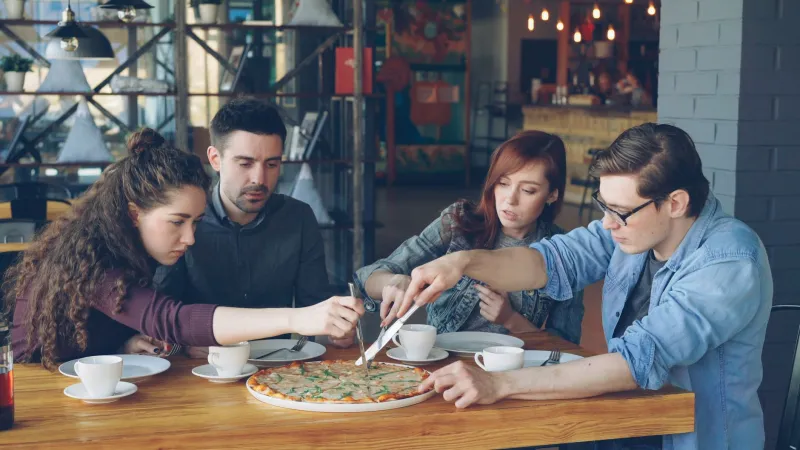
Somewhere in your memory, there's a pizza that exists on a completely different plane from every other pizza you've ever eaten. Maybe it's the corner spot your dad took you to every Friday growing up. Maybe it's the greasy slice window near your first apartment that was open until 2 AM. Maybe it's a place that doesn't even exist anymore, and yet you still describe it to people with the kind of specificity you'd use for a religious experience.
The crust was like this. The sauce had a specific sweetness that nothing else has ever matched. The cheese pulled in a way that just felt right.
And here's the strange part: you've probably had objectively better pizza since then. You just don't fully believe it.
Your Brain Isn't Evaluating Pizza — It's Comparing It
Human taste perception is not a neutral measuring instrument. Every new food experience gets filtered through a reference library built from everything you've eaten before, weighted heavily toward your earliest and most emotionally significant meals.
Psychologists call this phenomenon "sensory anchoring" — the tendency to use an early, emotionally loaded experience as the baseline for all future evaluations. In practical terms, it means the pizza you ate during a formative period of your life becomes your internal benchmark, and everything after it gets measured against that standard rather than evaluated on its own terms.
This is why you can eat a genuinely excellent pizza — better dough, better cheese, better technique — and still walk away with a vague sense that something was missing. The something that's missing is context. Memory. The specific emotional charge of that original experience.
The Role of Hunger (And Other Amplifiers)
First pizza experiences tend to cluster around conditions that are basically designed to make food taste extraordinary. Think about when you first started regularly eating at a specific pizza place.
You were probably young, which means your appetite was uncomplicated and enormous. You were probably eating with people you cared about — family, friends, teammates, a first date. You were almost certainly hungry in a way that adults rarely allow themselves to be anymore. And the novelty factor was cranked to maximum: your palate hadn't been exposed to hundreds of competing pizza experiences yet, so this one landed with full force.
Hunger amplifies flavor. Social connection amplifies satisfaction. Novelty amplifies memory formation. Your first regular pizzeria hit all three at once, and your brain filed it under "peak experience" before you were old enough to know what was happening.
Why Nostalgia Is Basically Teflon for Bad Memories
Here's where it gets interesting. Nostalgia has a well-documented bias toward positive recall. When you remember that childhood pizza place, you're not retrieving a balanced, accurate memory of every visit. You're retrieving a highlight reel — the good nights, the special occasions, the moments that felt significant.
The mediocre Tuesday when the pizza was lukewarm? Gone. The time the sauce tasted off? Buried. What remains is a composite ideal: the best version of that place, crystallized into a single emotional impression that never has to compete with reality again because the reality no longer exists to challenge it.
This is why closed restaurants always seem better in memory than open ones. The open ones keep making mistakes. The closed ones are frozen in amber, permanently perfect.
What This Means for How You Choose Pizza Now
Understanding the psychology of pizza anchoring explains a lot of adult food behavior that might otherwise seem irrational.
It explains why people drive past newer, higher-rated pizzerias to get to the place they've been going to for fifteen years. It explains why a transplant from New York will tell you Chicago deep dish "isn't real pizza" even after eating an objectively excellent deep dish. It explains why people describe their hometown pizza as the best in the country with a conviction that no amount of evidence will shake.
They're not being irrational. They're being human. Their benchmark was set early, it was set emotionally, and it's running quietly in the background every time they order.
How a New Place Becomes the Standard
The good news — for both pizza lovers and pizzerias — is that anchors can shift. Not easily, and not without the right conditions, but it happens.
The conditions required are surprisingly specific. A new pizza experience has to hit during a period of genuine openness — a move to a new city, a life transition, a moment when old routines are disrupted and new ones haven't formed yet. It has to be emotionally charged: shared with someone meaningful, tied to a new beginning, or simply encountered at a moment when you were really, truly hungry and paying attention.
And it has to be consistent. One great pizza doesn't rewire your standard. Regular visits over time, building a new layer of memory and association, is what actually shifts the anchor.
This is why Piezano's invests in consistency as aggressively as it invests in quality. A single great experience creates a fan. Repeated great experiences — the same crust, the same pull, the same satisfying weight of the box in your hands every time — create a benchmark. And benchmarks are forever.
The Opportunity in Every First Order
Every new customer who orders from Piezano's for the first time is, in some sense, carrying their old anchor with them. They have a pizza in their head that they're measuring everything against. The goal isn't to compete with that memory — you can't, because that memory isn't really about pizza anymore. It's about everything that surrounded the pizza.
The goal is to create something new. A reliable, consistent, genuinely good experience that starts building its own associations. The Friday night ritual. The post-game tradition. The first apartment in a new city where Piezano's was the number you called.
Becomes the standard. Stays the standard.
That's the real product. Not just the pizza — the memory of the pizza, stacked up over time until it becomes the thing every future pizza gets quietly measured against.