Your Pizzeria Is Showing: What Your Neighborhood's Pizza Loyalty Actually Says About Where You Live
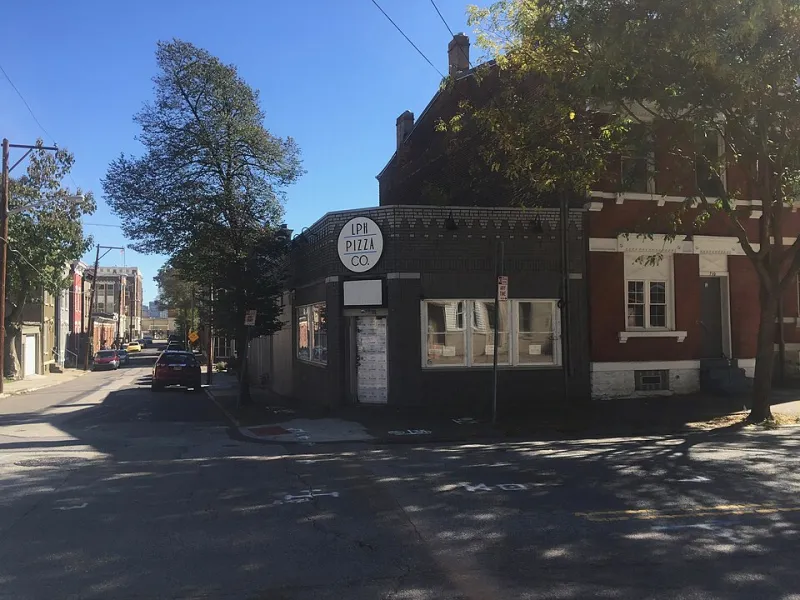
Photo: Warren LeMay from Cincinnati, OH, United States, CC0, via Wikimedia Commons
In most American cities, if you want to start an argument, you don't bring up politics. You bring up pizza. Specifically, you ask someone which local spot they swear by — and then you suggest they might want to try somewhere else.
The response you get will tell you something important: this isn't really about pizza. It never was.
The Invisible Map Every Neighborhood Has
Every city has one. An invisible geography of pizza loyalty that doesn't appear on any official map but that residents navigate instinctively. Certain corners belong to certain spots. Certain blocks have a pizzeria that's been there long enough to become furniture — part of the landscape, inseparable from the identity of the street it occupies.
People who grew up in a neighborhood know this map the way they know the shortcut through the park or the intersection that always floods. It's ambient knowledge, absorbed over years of Friday nights and post-game orders and birthday parties where the same boxes showed up at the door.
What's interesting is how durable this knowledge is. People move away from neighborhoods and still refer to their old local spot with a possessiveness that sounds slightly irrational from the outside. "My place" is how they say it, even if they haven't lived on that block in a decade.
Why Pizza Specifically Carries This Weight
Food in general carries cultural and emotional freight. But pizza has a particular relationship with American neighborhood identity that's worth examining.
Part of it is the communal format. Pizza is almost never a solo meal. It arrives in boxes that feed groups, it appears at gatherings, it's the default answer to the question "what should we get?" The food is structurally social in a way that, say, a sandwich isn't. Which means your pizza choices are always being made in relationship to other people — and the pizzeria you choose becomes part of a shared story.
Part of it is also repetition. A neighborhood pizzeria, unlike a restaurant that people visit occasionally for a special occasion, is ordered from weekly. Sometimes more. That frequency builds a familiarity that's closer to habit than preference — and habits, once formed, are deeply resistant to replacement.
And part of it is the specific nature of neighborhood businesses. A local pizzeria isn't a franchise unit of a national brand. It's a place with a name over the door that belongs to a person who lives somewhere in the same zip code. The money you spend there circulates differently. The relationship is different. There's an accountability and a presence that changes how people feel about the transaction.
The Pizzeria as Community Hub
Walk into a neighborhood pizzeria on a Friday evening and pay attention to what's actually happening. Yes, people are picking up orders. But they're also running into their neighbors. Kids from the same school are at two different tables. Someone's asking the person behind the counter about a local event. A regular is getting their usual without having to say what it is.
This is the function that local pizzerias serve that no food app or chain location replicates: they're a place where the neighborhood happens to itself. Not in a programmatic, community-building-initiative kind of way. Just organically, because people keep showing up to the same spot over and over.
Sociologists who study "third places" — spaces that aren't home and aren't work but serve as social anchors — often focus on coffee shops and bars. Pizzerias deserve more attention in this category. They hit many of the same notes: affordable, welcoming, recurring, and reliably populated by familiar faces.
The difference is that pizzerias serve every demographic. Kids, families, teenagers, older residents, people who live alone. The social cross-section at a local pizza counter on a Friday night is wider than almost any other food establishment. That breadth is part of what makes them such effective community anchors.
Loyalty as Identity Marker
Here's where it gets genuinely interesting from a cultural standpoint. Pizza loyalty in American neighborhoods functions as a kind of identity signal — a way of placing yourself within a community without having to say much.
When you say you're a Piezano's person, you're not just expressing a food preference. You're indicating something about where you live, how long you've been there, what you value in a local business, and who you eat with. It's shorthand for a whole set of associations that other locals immediately understand.
This is why recommendations work so powerfully in the local pizza context. "You have to try Piezano's" from a trusted neighbor lands completely differently than the same suggestion from a food app. It carries the weight of community endorsement. It says: this place is part of how we do things here. It's an invitation into a shared experience.
And the flip side — the defensiveness people feel when their local spot is criticized — makes more sense in this light. Criticizing someone's pizzeria is, in a small but real way, criticizing their neighborhood. Their taste. Their people.
What This Means for Places Like Piezano's
For a local pizzeria, understanding this dynamic isn't just interesting — it's practically useful. The relationship between a neighborhood and its pizza spot isn't just transactional. It's built over time through consistency, presence, and genuine participation in the community fabric.
Piezano's isn't just in the neighborhood. It's part of it. The boxes that show up at birthday parties and game nights and late-night study sessions are accumulating something that no marketing campaign can manufacture: a history. A shared story between a place and the people who keep coming back to it.
That story is what the invisible pizza map is actually made of. And it's why, when someone asks where you get your pizza, the answer means a little more than it probably should.
Which is exactly how it ought to be.